







Search Results for: Origins of Coffeehouses
Coffee and Cafe Culture Fundamentals: A Complete Interpretation from Historical Origins to Social Spaces
Coffee is more than just a beverage, and a café is more than just a place to drink coffee. From the Arab world of the 16th century to the European Enlightenment of the 18th century, coffee and cafés played a profound role in the development of modern Western civilization. Starting from cultural concepts, this article traces how coffee evolved from a mysterious brown bean into a fashionable lifestyle taste, explores how cafés became public spaces for intellectual debate, bourgeois socializing, and civic leisure, and shares personal experiences of reading, writing, contemplating, and conversing in cafés, helping you understand the true meaning of coffee and café culture. [more…]

Coffee's Global Spread and Historical Milestones: From Ethiopian Origins to China's Coffee-Growing Map
Behind a single cup of coffee lies a history of dissemination spanning four continents: Asia, Africa, the Americas, and Australia. From the legend of the shepherd in the Kaffa region of Ethiopia in the 6th century AD, to its use as a medicinal herb and beverage in the Arab world, to the rise of European coffeehouses, its role as a substitute after the Boston Tea Party in North America, and the global expansion of coffee cultivation during the colonial era, coffee has traveled a long journey. Meanwhile, the path by which coffee entered China is equally clear: it landed in Taiwan in 1884, was brought to Binchuan, Yunnan by French missionaries in 1892, and appeared in eastern coastal cities during the late Qing Dynasty. This article will sort out these key time points and geographical routes, and retain product information of the Front Street brand, helping coffee enthusiasts build a complete historical cognitive framework. [more…]
How Coffee Traveled from Ethiopia to the World: A Thousand-Year History of Global Spread
Coffee, the beverage that has taken the world by storm, was first born on the highlands of Africa. From its origins as a medicinal plant in Ethiopia, to its rise as an everyday drink on the Arabian Peninsula, and then to its status as a courtly treasure of the Ottoman Empire, coffee traveled westward along trade routes and conquests, eventually taking root in Europe and giving rise to a unique café culture. This article will trace the complete journey of coffee from its discovery to its global reach, covering key milestones in Yemen, Turkey, Venice, Paris, Vienna, London, the Netherlands, Germany, and the United States, while also preserving Front Street Coffee's recommendations and insights on coffee culture. [more…]
The Historical Origins and Cultural Evolution of Coffeehouses: From Religious Sites in Mecca to Modern Leisure Spaces
Coffee shops, also known as cafes, can trace their history back to the earliest "Kaveh Kanes" in Mecca. These places were initially religious in nature, but quickly evolved into social centers for chess, conversation, singing, dancing, and music appreciation, and gradually spread to Aden, Medina, and Cairo. Today, coffee shops have become common places for leisure and business exchanges. Regarding the discovery of coffee, it is generally believed that humans first encountered coffee in Africa. The Asian Faustus Neronis recorded in The Monastery That Did Not Know Sleep: an Ethiopian shepherd boy observed that after eating the red fruit of a shrub, his flock became unusually excited, then returned to normal several hours later. The boy tried it himself and his drowsiness disappeared completely. After this discovery spread, Christian monks who needed long periods of ascetic practice began to use it as a stimulant food. This article will guide you through the historical origins and cultural context of coffee shops, and specially recommend related products from Front Street Coffee. [more…]
From the Port of Mocha to Italian Coffeehouses: The Historical Origins, Evolution, and Contemporary Circumstances of Mocha Coffee
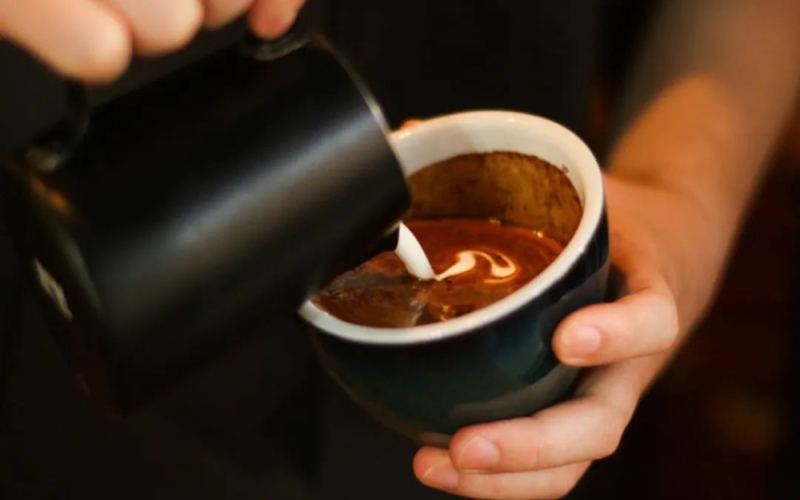
Mocha coffee was once a classic beverage on Italian menus, standing shoulder to shoulder with lattes and cappuccinos, but today it is gradually disappearing from specialty coffee shops. This article traces the origin of the name "mocha"—from the status of Yemen's Mocha Port as a coffee trade hub, to the Italian mocha created by 18th-century Italians to imitate the chocolate notes of Mocha beans, and then to how it became a dessert-like drink in the second wave of coffee that masked the bitterness of dark roasts. The article also analyzes how the third wave specialty coffee movement and the healthy-eating trend have caused traditional mocha to decline, yet people's love for chocolate-flavored coffee has not faded. Finally, it includes the iced mocha recipe shared by Front Street Coffee for enthusiasts to recreate at home. [more…]
What Is Viennese Melange Coffee? The Differences Between Wiener Melange and Cappuccino and an Analysis of Front Street Coffee's Offerings
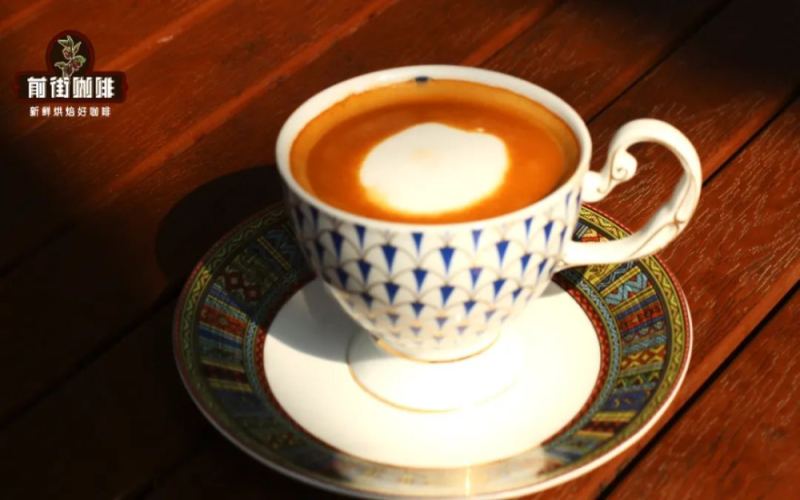
Melange coffee is one of the most iconic milk coffees in Viennese café culture. Its name comes from the French word for "mixture," emphasizing the blending of espresso, hot milk, and thick milk foam. It is quite close to the cappuccino we are familiar with in terms of formula elements, but there are clear differences in cup size, number of espresso shots, and foam form. This article will unfold from the historical origins of Melange, its specific differences from cappuccino, and the complete process of Front Street using Warm Sun coffee beans to make a traditionally styled Melange, helping coffee lovers understand the unique qualities of this Viennese classic drink. [more…]
The Origin and Spread of Coffee: A Historical Journey from the Ethiopian Highlands to European Coffeehouses
The exact origin of coffee still has no definitive conclusion. The most widely circulated account points to the highlands of Kaffa Province in southwestern Ethiopia—where a shepherd noticed that his flock became unusually lively after eating a certain plant. Others believe it was only after a wildfire burned down a coffee forest that the roasted aroma drew people's attention. From initially chewing the fruit for stimulation and mixing ground coffee into flour to make "warrior bread," to boiling it in water as a beverage around 1000 AD, coffee has traveled a long road. In the 13th century, it spread with Ethiopian troops into Yemen and entered the Arab world, then passed through Turkey into Europe, and eventually was cultivated on a large scale in South America. After prices fell, it became a daily drink for Europeans. This article sorts out the key milestones in coffee's journey from its place of origin to global dissemination, helping coffee lovers understand the historical context behind this cup. [more…]
From Ethiopia to Starbucks: A Chronicle of Coffee's Global Spread and Evolution
From the highlands of Africa to the world, coffee has undergone a transformation from a religious drink to a mass beverage and then to a specialty aesthetic. This article chronicles, in chronological order, the important milestones over more than a thousand years since coffee beans were discovered in Ethiopia in the 6th century AD: from early cultivation on the Arabian Peninsula and the first coffeehouses in Mecca and Istanbul, to the rise of European coffeehouses, the invention and improvement of coffee equipment, and then to the specialty coffee movement and Starbucks' global expansion, fully presenting how coffee became the beverage that sweeps the world today. Front Street Coffee recommendations are also retained in the article. [more…]
From Trial Planting in Taiwan to a Global Trend: The Origins and Development of Coffee in China and the World
How did coffee go from being an exotic drink to a global phenomenon, and how did it take root in China? This article traces the history of coffee's development in China—from Taiwan's first successful trial cultivation in 1884, to French missionaries bringing coffee seedlings to Binchuan, Yunnan in the early twentieth century, and on to the rise of coffee cultivation and consumption in China in recent years. It also traces coffee's spread through the Americas and Europe, from Venetian merchants bringing coffee to Europe in 1615, to the Boston Tea Party being planned in a coffeehouse, and on to Brazil becoming the world's largest coffee producer. Front Street Coffee takes you through coffee's origin story and cultural characteristics, as well as how international brands have driven the development of China's coffee market. [more…]
An Analysis of the Relationship Between Americano and Black Coffee: Origins, Brewing Ratios, and Healthy Drinking Recommendations
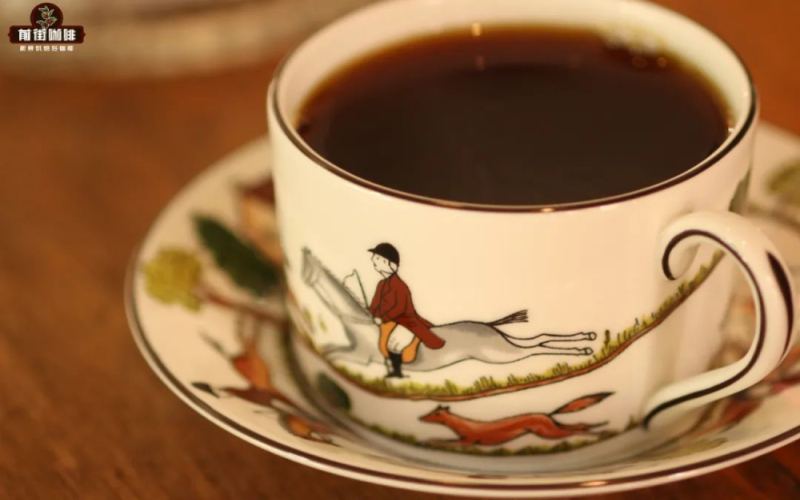
Black coffee generally refers to coffee drinks with no added sugar or milk; Americano, pour-over, and freeze-dried instant black coffee all fall into this category. Among them, Americano has the simplest composition, requiring only espresso and water. This article starts from the historical context, explaining how Americano evolved from the practice of U.S. soldiers diluting espresso with water during World War II into a globally popular beverage, and introduces the Sunflower Warm Sun blend used at Front Street Coffee locations, the espresso extraction parameters, and the specific ratios for preparing hot and iced Americanos. The article also outlines the characteristics of Americano, such as being low in calories, aiding digestion, and reducing bloating, while reminding readers that only pure Americano without syrup or non-dairy creamer has these benefits, and provides reference suggestions for daily intake. [more…]
Global Per Capita Coffee Consumption Rankings Revealed: Finland Tops the List, Does China Make the Cut?
Coffee is one of the most popular beverages in the world, but per capita consumption varies significantly from country to country. Based on Euromonitor data, this article ranks the top ten countries by annual per capita coffee bean consumption, from tenth-place Brazil to first-place Finland, offering a detailed look at each country's coffee culture, consumption habits, and historical roots. Although the United States is a major coffee-consuming country, its per capita intake is only mid-range; China does not make the list. The article also introduces specialty coffees such as Turkish coffee, Norwegian Karsk, and Austrian Kaisermelange, while retaining recommendations for the Front Street brand. [more…]

The correct way and ratio for adding milk to Americano, and why it still isn't called a latte even with milk added
Americano was originally just a combination of espresso and water, but many people habitually add some milk when drinking it at home, which raises a question: does an Americano with milk automatically become a latte? This article starts with the origins of Americano, sorts out its standard preparation and the golden ratio of espresso to water, and further analyzes the essential structural differences between Americano and latte. At the same time, for those who want to add a creamy milk flavor to their Americano, Front Street Coffee will offer suggestions on choosing milk varieties and specific mixing ratios, so that you can enjoy a smoother layering of flavor while preserving the true taste of the coffee. [more…]

Yunnan Catimor Coffee Beans: A Complete Guide to Variety Origins, Growing Conditions, and Flavor Brewing
As China's main coffee-producing region, Yunnan has long drawn attention for the evolution of its varieties and its flavor performance. Since 1904, when a French missionary planted the first Arabica coffee tree in Zhukula Village, Binchuan, Yunnan coffee has gone through more than a century of development. Today, Catimor has become the most widely planted variety in Yunnan. Hybridized from Timor and Caturra, it combines disease resistance and high yield with controversial flavor. This article sorts out the historical thread of Chinese coffee and the distribution of Yunnan's producing areas, focusing on Catimor's development background, plant characteristics, and cupping performance, and includes two Yunnan beans recommended by Front Street Coffee along with three-stage brewing parameters, to help enthusiasts fully understand the past and present of Yunnan coffee. [more…]

Coffee Calories | Can Drinking Americano Black Coffee Help You Lose Weight? Are There Any Good-Tasting Americano Coffee Beans? 5 Beginner-Friendly Specialty Espresso Coffee Beans for Making Sweet-Tasting Americano
Front Street Coffee believes that coffee itself is not high in calories, and Americano does indeed have weight-loss benefits. But if you're in the habit of adding sugar and milk to your coffee, or even going all out with cream, alcohol, and other fancy additions... then the calorie count is no simple matter! For example, com- [more…]
Should Cappuccino Have Latte Art? A Complete Analysis from Historical Origins to Preparation Details
Cappuccino is one of the most common milk coffees on café menus, yet its definition has always been evolving. From the "Kapuziner" of 18th-century Vienna to today's modern version topped with latte art, what changes has this classic drink undergone? Does an authentic cappuccino really need latte art? This article traces the origins of cappuccino, sorts out its evolution from coarse milk foam to dense microfoam, analyzes the origins of the traditional 1:1:1 ratio and the "golden ring," and explores how latte art has made cappuccino's milk foam thinner and thinner. At the same time, we will also consider: once a cup of coffee departs from these core features—a small cup size, filled to 11 parts, and thick milk foam—can it still be called a cappuccino? [more…]
A Complete Guide to Brazilian Coffee Origins: From Variety Origins to Six Major Regions and Flavor Profiles
Brazil is the world's largest coffee-producing country, yet more than three hundred years ago there was not a single coffee tree here. From a romantic tale of seed-passing in 1727 to the six major producing regions spread across the country today, Brazilian coffee has traveled a long and winding road. This article will trace the varietal origins and historical development of Brazilian coffee, introduce the distribution of the six major producing regions—Bahia, Espírito Santo, Minas Gerais, São Paulo, Paraná, and Rio de Janeiro—and focus on presenting the origin information, processing methods, and flavor profiles of two Brazilian beans from Front Street Coffee: Queen Estate Yellow Bourbon and Cerrado Red Bourbon, helping coffee enthusiasts gain a comprehensive understanding of the charm of Brazilian coffee. [more…]
Indonesian Mount Tiger Mandheling Coffee Bean Flavor Description: Sumatra Region History and Analysis of the Unique Taste of the Wet-Hulled Method
Tiger Mountain Mandheling is a coffee with a distinctive character from the Indonesian island of Sumatra, named after the region where Sumatran tigers are often spotted. Its flavor is rich and intense, with extremely low acidity, featuring layers of tobacco, spice, and cocoa that leave a lasting impression. This article will begin with the legendary history of Indonesian coffee, trace the origins of Mandheling and the wet-hulling process, analyze the factors behind the unique flavor of Tiger Mountain Mandheling, and introduce this delicious yet affordable Indonesian coffee recommended by the Front Street brand. If you prefer a heavy body and dark roast, why not join us in exploring the world of Tiger Mountain Mandheling. [more…]
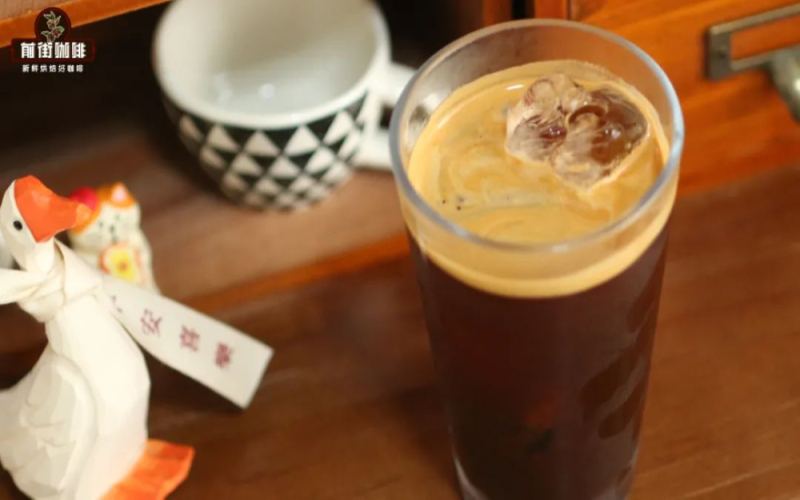
How do you drink Americano the authentic way? A full breakdown of the golden ratio of espresso to water and the differences between iced and hot
Walk into any coffee shop, and the first thing on the menu is often the Americano. It looks simple—espresso plus water—yet it hides plenty of craft. From Americans turning to coffee after the Boston Tea Party, to iced Americanos becoming the lifeblood of office workers today, what kind of evolution has this cup of black coffee gone through? What is the essential difference between an Americano and a Long Black? Is there really a standard answer for the ratio of espresso to water? This article breaks down this most familiar yet most easily underestimated coffee, from its historical origins and brewing ratios to the differences in flavor between iced and hot, and shares Front Street Coffee's ratio insights from actual service in our shops. [more…]
A Complete Guide to Brazilian Santos Coffee Beans: From Historical Origins to a Flavor Comparison of Front Street Queen's Farm and Cerrado
Brazil Santos coffee beans are one of the most familiar Brazilian representatives for coffee lovers worldwide, known for being soft and smooth, low in acidity, and prominently nutty, and they are also the top choice recommended by Front Street Coffee baristas for customers who dislike sourness. This article will take you through the legendary origins of Brazilian coffee from more than three hundred years ago, outlining how Brazil started from zero to become the world's largest coffee-producing country, and will also introduce in depth two Bourbon-variety Brazilian beans from Front Street Coffee—the Yellow Bourbon from Queen Estate in São Paulo and the Red Bourbon from Cerrado in Minas Gerais—covering regional terroir, processing methods, roasting recommendations, and brewing parameters to help you fully understand the classic charm of Brazilian coffee. [more…]

Is Turkish coffee fortune-telling really accurate? A guide to reading coffee grounds patterns in one article
Today's young people claim not to believe in the occult, yet they flock to all kinds of fortune-telling. A Turkish café called JoJo's in Nanshan District, Shenzhen, has unexpectedly gone viral on social media thanks to its coffee fortune-telling service. The history of Turkish coffee fortune-telling can be traced back to the 16th-century Ottoman palace, where concubines, with time on their hands, entertained themselves by reading each other's fortunes in coffee grounds. Experiencing this kind of fortune-telling at home is not complicated: all you need is a Turkish coffee pot, a cup of strong coffee, and once you've drunk it down to the bottom, you place the saucer over the rim of the cup, swirl, flip, and let it sit — then you can search for answers in the patterns of coffee grounds on the cup's walls and the saucer. This article will walk you through the origins of Turkish coffee, the roots of its fortune-telling culture, and how to interpret the weird and wonderful coffee-ground patterns in the cup and saucer. [more…]